· 8 min read
The name on the truck door proves nothing. How E3 catches magnetic decals before pickup
Federal rules let a carrier's name hang on a truck door with a magnet, so the markings alone prove nothing about who is hauling the load. Here's how thieves use magnetic decals and how E3 driver authentication checks the truck side before pickup.
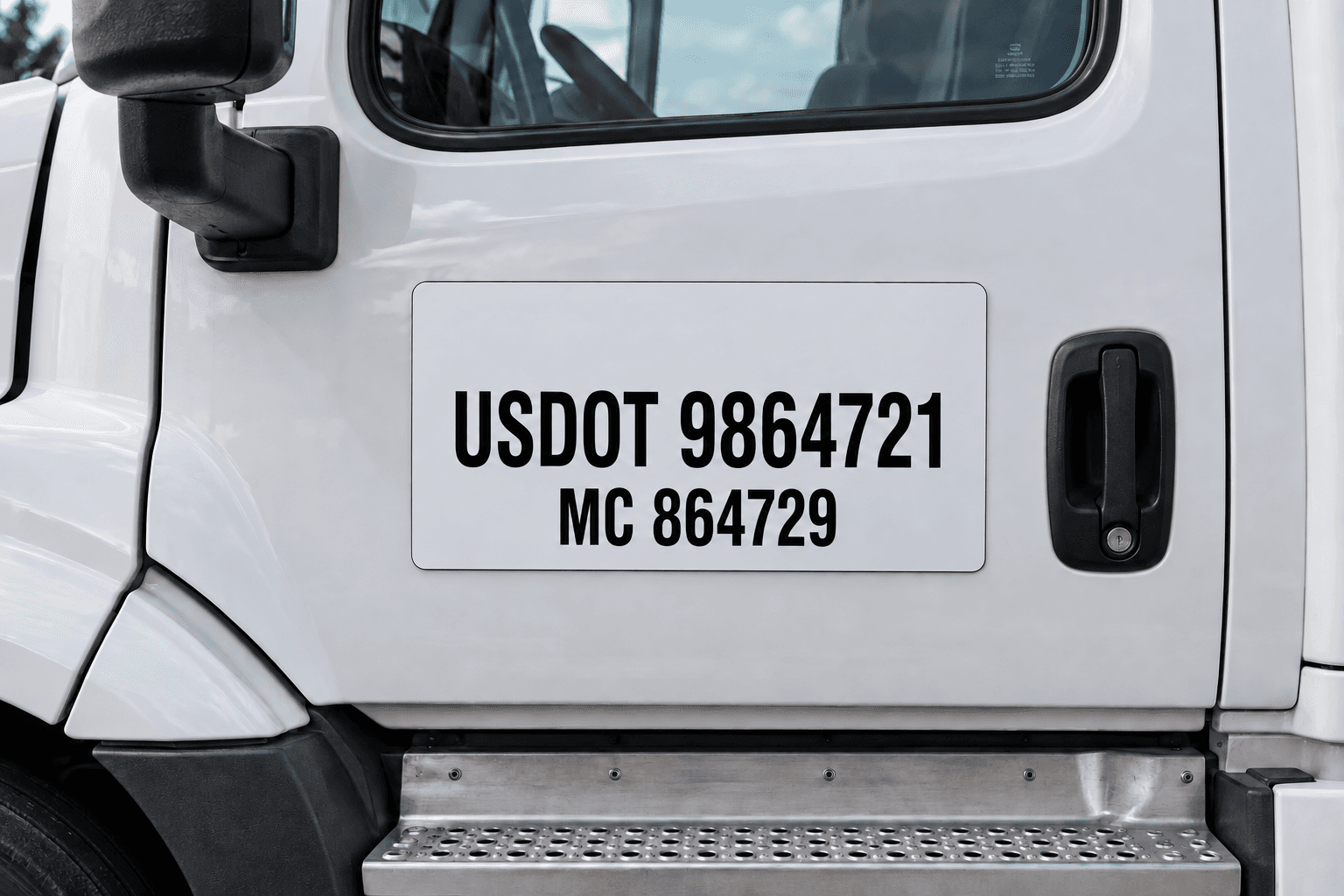
A carrier's legal name and USDOT number can go on a truck door with a magnetic sign in a few seconds, and federal marking rules allow that sign to be removable. The name on the door therefore tells a broker nothing about who is actually hauling the load. E3 driver authentication reads the side of the truck and checks it against the carrier's record and the specific load before the driver ever receives the pickup number.
In September, a $586,000 copper load bound from DeKalb, Illinois, to Rock Hill, South Carolina, was collected by people posing as the carrier booked to haul it and driven to a rented warehouse in Prestonsburg, Kentucky. Prestonsburg's police chief said the truck had been disguised with magnetic decals to look like the intended carrier, and police said magnetic stickers covered the truck's real USDOT number. Investigators recovered the freight within hours because the trailer carried GPS tracking, which is unusual. The setup is one we see attempted at pickup, where a real carrier's identity and door markings to match it carry a thief through the gate.
A magnetic decal turns any truck into your carrier's truck for one load
How the scheme works
The scheme starts with a carrier that is real, active and in good standing, often one a broker has already approved and moved freight with. The thief takes over or copies that carrier's identity and books a load under its name. The tractor that arrives at the shipper carries the carrier's legal name and USDOT number on both doors. To the shipping clerk and the guard, the truck looks like the carrier the broker booked, because on paper and on the door it is that carrier.
The real carrier and its drivers are victims here as much as the broker and shipper are, since their name and their safety record are what make the pickup look routine. It's a form of carrier identity theft, which we cover alongside fictitious pickups in our guide to the types of freight fraud brokers face.
Why the markings are cheap to fake
A magnetic sign or a vinyl decal with a carrier's name and number can be produced quickly and comes off as easily as it goes on. That means the same tractor can carry one carrier's name to a pickup and another carrier's name to its next job, while nothing left on the truck afterward ties it to the theft. The low cost is the point, because a thief who can change identities between loads doesn't need to invest in any one of them.
Federal rules allow removable markings, so markings aren't identity
Under 49 CFR 390.21T, a self-propelled commercial motor vehicle must show the operating carrier's legal name or a single trade name on both sides. It must also include the carrier's identification number preceded by "USDOT" and be legible from 50 feet in daylight while the vehicle is stationary, and the regulation says it may be a removable device as long as it meets those requirements. FMCSA's latest paperwork renewal for these rules, published as a June 1, 2026 notice (OMB Control No. 2126-0054), left the regulation itself unchanged, and the agency says it "does not require a specific method of marking" as long as the marking complies.
The rule exists so that enforcement officers and the public can tell which carrier is responsible for a truck, and it does that job well for honest carriers. It was never written to prove identity at a shipper's dock. A guard who sees the right name on the door has confirmed what the regulation asks for, but has learned nothing about who is driving or whether that truck belongs to the load.
Carrier vetting, a visual check and simple OCR all miss the decal
Carrier vetting confirms that the carrier exists, holds authority and carries insurance, and in a decal scheme all of that is true because the identity is borrowed from a legitimate company. Carrier vetting tells you who owns the truck, but it can't tell you who is driving it, and a magnetic decal is built to live in that gap.
A visual check at the gate fails for different reasons. The guard sees the correct name and number on the door, displayed the way the law says they should look. The check happens after the truck is already on site and the freight is about to be loaded. It also depends on one person's judgment during a busy shift and leaves no record that anyone can review if the load disappears.
Simple optical character recognition (OCR) reads the name and USDOT number on the door correctly, since the decal copies the real carrier's details. Reading the text doesn't tell you whether that number belongs to this tractor, this load or this driver. Our co-founder and CEO Aqil Naeem calls magnetic decals "the number one way people are able to impersonate another carrier and get past simple OCR systems." E3 reads truck-side text as well, but the reading is only the first step, and what matters is what it gets compared against and whether the photo was captured live.
How E3 driver authentication reads the side of the truck
What the driver sends
The driver receives a text link and takes live photos of the side of the truck, their CDL and the cab card, along with a selfie. E3 takes control of the phone's camera for each photo, so nobody can submit an old picture from a camera roll or an edited file. The process is short enough that 96% of drivers complete E3 driver authentication, which matters because the real driver benefits when their carrier's name can't be borrowed.
What the truck side is checked against
The carrier name and numbers on the truck are checked against the cab card and the CDL, and against the carrier's USDOT record, including its legal name and DBA. They're also checked against the MC, DOT and VIN on the load in the broker's TMS. A decal can copy a real carrier's name perfectly and still fail when it sits on a tractor whose cab card, VIN or load assignment points somewhere else. We don't publish how those comparisons are scored, because a detailed description would mainly help the people trying to beat them. In our view, E3 is the only driver authentication provider catching magnetic decals at the driver level before pickup.
Other truck-side fraud the same check catches
The same truck-side photos surface related schemes we see at pickup. They include paper taped over a DOT number, a VIN that doesn't match the cab card, and AI-generated truck images. They also catch photos taken of a screen instead of a real truck, and a different person arriving than the one who authenticated.
When the check happens
Authentication runs hours before the scheduled pickup rather than at the gate, and the pickup number is held until the driver and truck pass. As the driver approaches a geofence around the pickup location, E3 rechecks their identity before releasing the number, so a swap between authentication and arrival still gets caught.
Trained on real pickup fraud and updated as fakes change
Our models are trained on the fraud we see at pickup, from taped-over DOT numbers to magnetic decals and AI-generated truck photos, and we add new fraud patterns every week as they appear. A decal that worked on a gate guard last month gets added to what the system recognizes, which a static checklist at the dock can't do.
For how we build and run these models, see why E3 driver authentication isn't an AI wrapper.
Brokers get a decision at pickup and a record that lasts
For the broker, the result arrives as a go or no-go with the flagged signals and the photos attached, delivered in Slack, Microsoft Teams or Google Chat. The final call stays with the broker's team, and every step is logged under the broker's own SOP. For the shipper, E3 provides the expected truck photo and driver selfie before arrival. The dock then knows what should pull in, rather than relying on the name painted or stuck on the door.
That record is what makes the check defensible later. If a shipper, insurer or attorney asks what was done before the freight was released, the broker can show what was checked, when and under which SOP. Nobody has to reconstruct a phone call from memory. We explain why that matters for liability in your driver conversations are evidence now.
E3 driver authentication has run on more than 700,000 authenticated loads with zero stolen loads, using 50+ fraud signals and returning a result in under 60 seconds, with patent-pending photo authentication. Backed by our 100% fee-refund promise. If a theft occurs on an E3-authenticated shipment, we refund every fee paid to date.
Add truck markings to your pickup SOP
Most pickup SOPs say something about the driver and nothing about the truck, which leaves the decal scheme untouched. These four lines close that gap and can sit alongside the controls in our guide to protecting high-value freight when thieves don't need to break in.
- Require a live truck-side photo before the pickup number is released.
- Require the carrier name and USDOT number on the truck to match the carrier record and the load in the TMS.
- Treat any mismatch as a hold, with no pickup number until someone on the team reviews it.
- Keep the photos and the result with the load record.
FAQ
Are magnetic carrier signs legal?
Yes. Under 49 CFR 390.21T, a carrier's required name and USDOT marking may be a removable device as long as it is legible from 50 feet and appears on both sides of the vehicle. That's why a marking on its own isn't proof of who is operating the truck.
Can carrier vetting catch a fake decal?
Usually not, because the decal copies a real carrier that passes vetting. Vetting confirms the carrier, while a decal scheme depends on someone else showing up in that carrier's name.
What happens if the truck side doesn't match the load?
With E3 driver authentication, the broker receives a no-go with the flagged signals and photos, and the pickup number stays held until the team reviews it. The result is logged with the load under the broker's SOP.
If a truck at your dock this year carried the right name but didn't feel right, book a demo and walk through that load with our team to see which checks E3 driver authentication would have flagged.
- Cargo theft
- Carrier identity theft
- Magnetic decals
- Driver authentication