· 4 min read
Why 96% of drivers complete E3 driver authentication
96% of drivers complete E3 driver authentication. No app, faster repeat visits, and human support. And what the 4% who don't tell brokers.
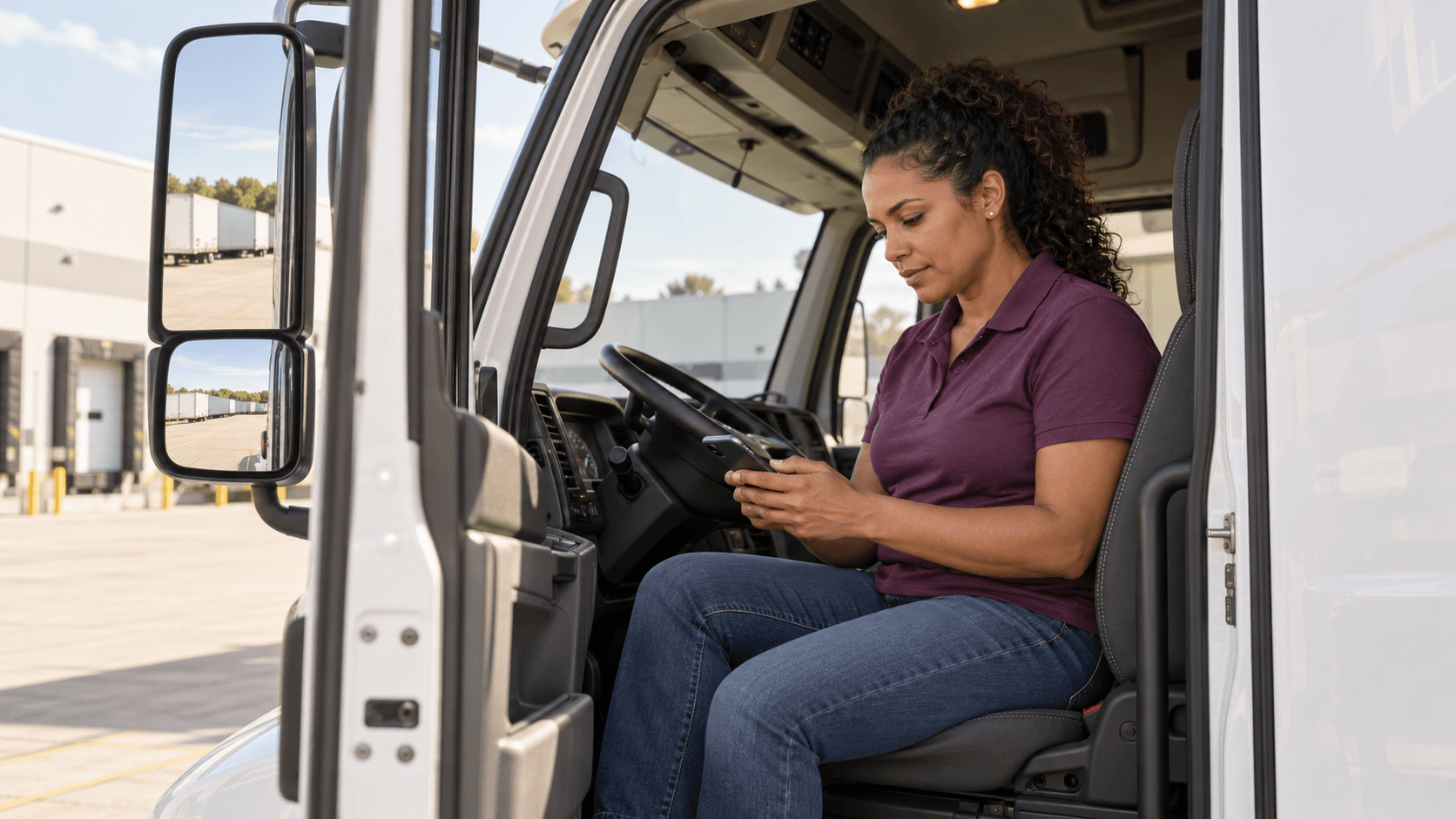
96% of drivers who receive an E3 driver authentication request complete it.
A driver authentication check only protects a load if the driver actually completes it. A check drivers skip doesn't reduce phone calls. It just sends your team back to the phone.
A check drivers skip sends your team back to the phone
When a driver doesn't finish an authentication request, one of three things happens. Someone on your team chases the driver by phone, the pickup waits, or the load leaves without a record of who took it.
Broker operations teams know the pattern. Drivers ignore tracking links. Drivers say they never got the text. Every one of those gaps turns into manual follow-up at the moment your team has the least time for it.
Our view: judge any driver authentication tool on completion first. Signals, integrations and dashboards only matter for the drivers who get through the process. We cover the other questions worth asking in Eight questions that separate driver vetting tools.
Drivers complete the process because the process is built for the person in the cab
The driver gets a request, opens it on their phone, and completes a short set of steps, including a selfie and a truck-side photo. Here, the question is why drivers actually fill out the entire questionnaire.
There's no app to download and no account to create
Drivers complete E3 driver authentication on a simple web page. Any phone with an internet connection and a camera works. There's nothing to install, no login to remember, and no password reset standing between a driver and the dock.
Returning drivers move faster
A driver who has authenticated with E3 before doesn't start from scratch. They take a new selfie and a new truck-side photo, and eligible, unexpired documents from a previous load can be reused. The second load is lighter than the first.
A real person picks up when a driver gets stuck
The authentication flow includes a "Request Help" button. It routes the driver to E3's Driver Support Team, who contact the driver directly and work through the problem with them.
Brokers can see how many times support reached out to a driver and the record of each exchange. A stuck driver becomes a documented support interaction, not a mystery.
Drivers consent, and their data doesn't linger
Drivers give consent on the first screen, before anything else happens. E3 deletes personally identifiable information after its essential use.
That matters to drivers. Thieves often hide behind a real driver's or carrier's identity, which makes legitimate drivers victims too. Read what drivers told us they want brokers to understand in Driver Appreciation Week: what drivers told us.
The 4% who don't complete are telling you something
When 96% of drivers finish, the drivers who don't stand out. In E3's data, the roughly 4% who don't complete authentication often show early indications of potential fraud.
A process drivers routinely skip can't tell you this. If half your drivers ignore a link, a missing response means nothing. When nearly every driver completes, a missing response is a signal worth acting on before the truck backs into the dock.
When authentication fails or isn't completed, E3 withholds the pickup number and alerts the broker. The brokerage makes the final call, and every manual change is logged. That record is what your legal and compliance teams will ask for later. We cover why in Broker liability and driver communication records.
Scale makes each authentication stronger
E3 has built a network of unique authenticated drivers. More than 5,000 drivers authenticate with E3 every day, and E3 has authenticated more than 700,000 loads with zero stolen loads.
Scale changes two things for a broker. First, more of your drivers are likely to be returning drivers, so their requests take less effort. Second, more history feeds E3's 50+ fraud signals, which makes each new authentication better informed than the last.
Brokers and shippers get a record instead of a phone call
For brokers, high completion means authentication that keeps pace with pickups. Authentication takes 2 minutes or less.
For shippers, it means driver-level visibility without adding a delay at the dock.
For both, every load carries an auditable record: who was authenticated, when, what support was offered, and what decision the brokerage made. That record replaces the phone call, and it supports the SOPs your compliance team already wants to enforce.
Frequently asked questions
Do drivers need to download an app for E3 driver authentication?
No. Drivers complete E3 driver authentication on a web page from any phone with an internet connection and a camera. There's no app and no account to create.
What happens if a driver can't complete authentication?
The driver can tap "Request Help" to reach E3's Driver Support Team, who contact them directly. If authentication still isn't completed, E3 withholds the pickup number and alerts the broker, and the brokerage makes the final decision, which is on the record.
Is authentication faster for repeat drivers?
Yes. Returning drivers take a new selfie and truck-side photo, and eligible, unexpired documents from a previous load can be reused.
What happens to driver data?
Drivers consent on the first screen. E3 deletes personally identifiable information after its essential use.
See what drivers see
The fastest way to judge a driver authentication process is to go through it yourself. Book a demo and we'll show you the request from the driver's side and the record from yours.
- Driver authentication
- Freight fraud
- Brokers